


Rubber Molds: Making Them for Cast Stone and Plaster Work
Introduction
If you are making cast stone features or other architectural details, rubber molds are the backbone of the process, especially in the world of smooth limestone or plaster-style products. A good mold allows you to reproduce the same part repeatedly, with consistent shape and surface detail.
There are other media and methods used for forming patterns and molds, such as CNC hotwire machines and large blocks of polystyrene, but rubber molds remain the most flexible and widely used solution for repeatable work.
This article explains how rubber molds are made, which materials are suitable, and what matters when molds are used with heavier casting materials such as plaster and stone-based mixes. It is written for practical use rather than hobby display.

What a Rubber Mold Does in Cast Stone Work
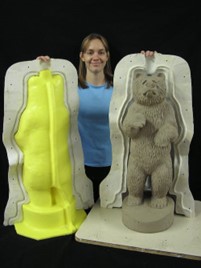
A rubber mold is a flexible negative of an original part, often referred to as a master or pattern. Once the mold has cured, it can be filled multiple times to produce identical castings.
In cast stone and architectural work, rubber molds are commonly used for:
- Decorative brackets and corbels
- Columns
- Balustrades
- Copings and wall caps
- Trims and sills for openings
- Frieze panels and other special features
- Garden statuary, planters, and pots
- Water features and fountains
- Paving, wall veneers, and quoins
- Repairs to natural stone where originals are missing or damaged
Flexibility is critical. A rigid mold would lock onto the casting, while rubber allows controlled release without damaging edges or surface detail.
It is worth stating upfront that not all cast stone work is commercial or industrial. Many smaller or less complex applications sit comfortably in the advanced DIY or serious craft category. Simple brackets, trims, plaques, small repairs, pavers, veneers, and decorative elements can all be made in a home workshop or covered outdoor area using basic tools and the correct materials. The same rubber mold techniques apply, even though the finished pieces are heavier than typical craft castings.
Rubber Mold Materials Used for Cast Stone and Plaster
In practical casting work, rubber usually means silicone or urethane rubber. Each behaves differently under load and repeated use, and the choice is often dictated by the required surface finish of the cast piece.
For smooth limestone-style or plaster products, silicone rubber is generally the best choice. Urethane can also be used for smooth finishes, but not with the same ease. Correct mold release selection becomes more critical, and mold cleaning between pours requires additional care.
Silicone rubber is widely used because it remains flexible over time and is less sensitive to working conditions. It reproduces fine detail well and remains stable when exposed to alkaline materials. Silicone molds also require less maintenance and, in most cases, do not need constant application of mold release. This results in quicker turnaround times, reduced labour, and higher output when managed correctly.
Urethane rubber is tougher and is often chosen where abrasion resistance is important. It can be suitable for longer production runs but is more sensitive to moisture and requires stricter control during mixing and curing when the mold is being made.
Latex rubber is rarely used in modern cast stone work due to shrinkage and limited lifespan and is not recommended for general use.
Material choice directly affects mold life, surface finish, and ease of demolding, particularly with heavier casts.
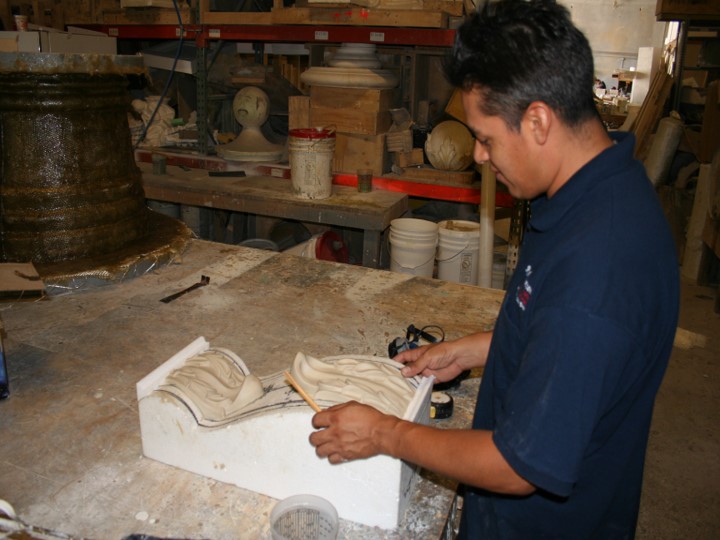
What Is Required to Make a Working Mold
The process itself is straightforward, but preparation is critical.
You will need:
- A clean, prepared, and stable master or pattern
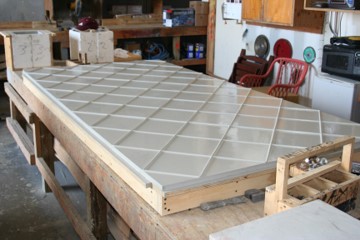
- A properly sized mold box to control rubber thickness and hold the rubber in place while it cures
- Rubber selected for compatibility with the casting material and the level of detail required
- Accurate measuring and mixing tools
- A level working surface
Mold boxes are not optional in this type of work, although the materials used to build them can vary. Uniform wall thickness improves mold strength, prevents distortion, and significantly extends mold life, particularly when molds are reused regularly.
Why General-Purpose Silicone Is Not Suitable
Most people in the trade know that construction and bathroom silicones are designed as sealants, not mold-making materials. They cure inconsistently, are usually too stiff, and do not tolerate repeated casting cycles. Their correct use in this context is limited to sealing mold boxes or securing models.
RTV (room temperature vulcanising) mold-making silicone is formulated to remain elastic while holding surface detail. For cast stone and plaster applications, this flexibility is essential to avoid tearing or edge damage during demolding. RTV silicones are available in a range of Shore hardnesses, and selection should be based primarily on the complexity and detail of the piece being produced.
Food-grade silicone represents the upper end of silicone performance. One key advantage is its higher temperature resistance. Many casting materials generate exothermic heat during curing, which can be significant, and higher-grade silicones tolerate this better over time.
Using the incorrect silicone usually results in short-lived molds and wasted materials.
RTV urethane rubber is tougher and is often selected where abrasion resistance, cost, and mold longevity are key considerations. As with silicone, urethane rubbers are available in a range of Shore hardnesses, and selection depends on the design complexity and handling requirements of the final piece.
Basic Mold-Making Process for Cast Stone Applications
A simple one-piece pour mold is often sufficient for flat or shallow components.
The master is fixed securely inside a mold box, and both the model and mold box are fully sealed to prevent movement or leakage. Rubber is mixed accurately and poured slowly, allowing it to flow evenly around the pattern and self-level.
Curing must be complete before demolding. Premature removal weakens the mold and shortens its service life.
Once cured, the mold should be inspected for imperfections, checked for adequate flexibility, and assessed for surface integrity before use.
This type of mold forms the foundation for more complex split molds and tooling when required.
Common Problems Seen in Early Cast Stone Molds
Frequent issues include:
- Rubber poured too thin in places, leading to distortion
- Poorly sealed mold boxes or models causing leaks, movement, or demolding problems
- Incompatible rubber used for certain stone or plaster-based mixes
- Trapped air caused by rushed or incorrect pouring techniques
Most failures result from moving too quickly or skipping fundamental setup steps.
Where This Fits in a Larger Workflow
Rubber mold making sits between pattern creation and casting. It is not an isolated skill.
From this point, the next logical steps include:
- Building stronger and more durable mold boxes
- Understanding suitable release agents for plaster and stone-based products
- Designing molds for repeated use
- Managing wear and planning mold replacement
These topics build on the same fundamentals but apply them to longer-term, real-world use.
Contact us
If you have questions about rubber mold making for cast stone or plaster, or want to share your own experience, feel free to leave a comment below. Practical feedback, alternative approaches, and real-world observations are always welcome. If you need specific advice for a particular application or repair, you can also get in touch directly through the contact page.
Author
Robby
CastStone Pro
Practical guidance based on decades of hands-on experience in cast stone manufacture, architectural detailing, mold making, and restoration work. The methods described here are the same core techniques used across home workshops, specialist repair work, and professional cast stone production, with scale and handling being the primary variables.



Leave a Reply